

(Tuktoyatuk, 1925-1996). Made of bone and vertebrae. Approximately seven pieces to assemble including the sculpture, bone necklace, fishing rod and lure, tool and separate vertebrae piece. Said to represent a medicine man. The hole in the back of the carving represents a cave where the Eskimos used to leave gifts for the medicine man. The bird on top of the man’s head would be sent out to check other tribes and let the medicine man know if any tribe was in trouble. The short bone on the man’s head showed what tribe of Eskimo the man belonged to. The two bones under his lips mean that he was a good hunter and that he could afford two wives. The man’s dog was his guard and was always with him. The bear, the whale, the seal and the fish show the kind of food the Eskimo people lived on. The skulls around the man show that he wants to keep other tribes away from his hunting grounds. The Eskimo lamp behind the man is where he got his heat and light from. The homemade tools were used to make holes in the ice. Fully assembled measures: 38″ high. Without bird: 24″ high x 13″ wide x 21″ deep. Second vertebrae: 6″ high x 12″ wide x 7 1/2′ deep. Included is a story about the sculpture from which this description was drawn. Age appropriate wear. Part of the fish is possibly missing. The dowel attachments for the fishing rod have been changed to screws which are not visible.
The Alfred J. Walker Estate and More Part 1
April 25th, 2026
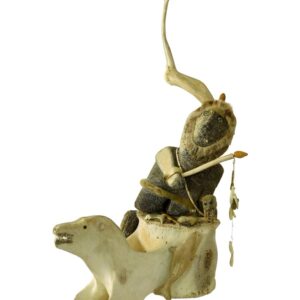
Jimmy Jacobson Inuit Carved Whalebone Sculpture